

Patrocinado
IT Infrastructure Services Market Solution Combines Hybrid Ops Security Cost Governance And Automation
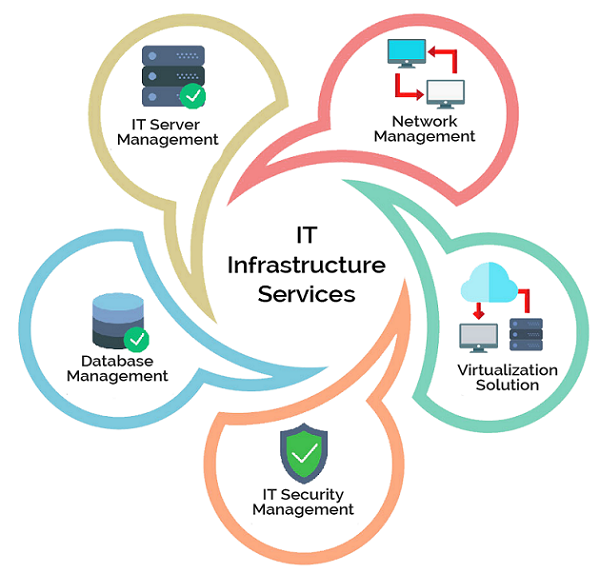
A practical IT Infrastructure Services Market Solution must start with a clear operating model for hybrid environments. Organizations should define which workloads run on-prem, in colocation, or in public cloud, and establish consistent standards for networking, identity, monitoring, and data protection. The solution should include 24/7 monitoring, incident response, and change management with clearly defined SLOs. Automation is foundational: infrastructure as code, standardized provisioning, patching automation, and configuration drift control reduce outages caused by human error. Observability should unify metrics, logs, and traces across environments so issues are detected early and diagnosed quickly. Data protection must be robust—backup, immutability, recovery testing, and disaster recovery runbooks. Security must be integrated through least-privilege access, segmentation, continuous vulnerability remediation, and comprehensive logging. Without security-by-design, infrastructure services become a risk multiplier rather than a resilience enabler.
Cost governance should be embedded through FinOps practices. Tagging standards, cost allocation, budget alerts, and rightsizing recommendations help prevent runaway cloud spend. The solution should include capacity planning for on-prem and reserved capacity planning for cloud. A governance cadence—monthly service reviews and quarterly optimization plans—keeps performance and cost aligned with business needs. Tooling standardization is important; a cohesive stack for monitoring, ticketing, automation, and reporting prevents fragmentation. Integration with ITSM systems ensures incidents and changes follow consistent workflows. For compliance-heavy organizations, the solution must provide audit trails, access reviews, and documented controls. Service providers should offer clear escalation paths and runbooks, reducing confusion during outages. Co-managed models can improve alignment by keeping client architecture teams involved while outsourcing routine operations. A strong solution balances flexibility with standardization so environments can evolve without losing control.
Implementation should follow a phased approach. Begin with discovery and baseline assessment: inventory assets, map dependencies, measure current uptime, patch compliance, and recovery readiness. Then prioritize high-risk gaps—backup immutability, monitoring blind spots, and vulnerable systems. Transition plans should include knowledge transfer, documentation, and parallel operations periods to reduce downtime risk. Establish KPIs such as MTTR, patch compliance rates, backup success, and RTO/RPO achievement. Introduce automation iteratively, starting with repeatable tasks like patching and provisioning. Validate disaster recovery through regular drills, not just documentation. Security controls should be tested continuously through vulnerability scans and access audits. For global environments, data residency and regional support coverage must be planned. This phased implementation reduces disruption and builds confidence while improving reliability step by step.
A mature infrastructure services solution evolves into a platform operations model. Self-service portals and standardized pipelines enable faster provisioning for application teams. Policy-as-code enforces security and compliance automatically. AIOps can reduce alert noise and accelerate incident diagnosis, though human oversight remains essential for critical systems. Edge management capabilities will expand as organizations deploy distributed sites and devices. Sustainability optimization may become part of routine operations, reducing energy usage and cloud waste. Over time, the solution’s success will be judged by outcomes: fewer outages, faster recovery, stronger security posture, and controlled costs. When infrastructure services are operated as a measurable, automated platform, organizations gain a resilient foundation for modernization—enabling cloud adoption, digital products, and scalable operations without sacrificing control or trust.
Top Trending Reports:
Categorias
Leia mais
In response to growing user concerns over digital privacy, Facebook introduces significant updates to its platform. These changes aim to empower individuals with greater control over their personal information and social interactions. A new data portability tool allows users to compile their entire Facebook history into a downloadable archive. This comprehensive file includes posts, messages,...

A new Netflix series draws from the harrowing memoir of a Cambodian author. Angelina Jolie steps into the director's chair for this project, marking her fourth feature film as director. She co-wrote the script with author Loung Ung, whose story recounts surviving as a child soldier under the Khmer Rouge regime. Jolie's adopted son, Maddox, who is from Cambodia, will be involved in the...
The Industry 5.0 Market Growth is redefining the global manufacturing landscape, driven by a shift towards human-centric automation, advanced digital technologies, and next-gen production systems. As industries transition from the highly automated Industry 4.0 frameworks to Industry 5.0, the focus is no longer just on efficiency but also on resilience, personalization, and sustainability....
VPN and Server Rotation Strategies Facing Discord restrictions? Circumvention typically involves two key changes: a fresh account and a masked IP address. Virtual Private Networks (VPNs) enable this by assigning you a different IP, making your connection appear from a new location. This digital relocation helps bypass server or platform-level bans tied to your previous identifiers. Essential...
Season 5 Premiere Details The long-awaited return of our favorite fashion-forward American in Europe is just around the corner! Season 5 of the popular streaming series following the adventures of a marketing executive abroad will hit screens on Thursday, December 18, 2025, dropping at 3 a.m. Eastern Time and midnight Pacific. After the dramatic events in Rome during Season 4, viewers can...